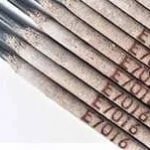
Filler metals play a crucial role in welding, as they are used to join two or more metal components together. The American Welding Society (AWS) has established a classification system to categorize and standardize filler metals based on their chemical composition, mechanical properties, and intended applications.
The American Welding Society (AWS) classification system is the global language of welding consumables. Whether you are writing a Welding Procedure Specification (WPS) or pulling a rod from the oven, understanding exactly what “E7018-H4R” means is not just academic trivia—it is a code requirement.
This guide breaks down the AWS A5.X series of specifications,
In this article, we will explore the AWS classifications of filler metals and understand how they help ensure proper selection and usage for various welding processes.
The “Big Book”: AWS A5 Series Specifications
Before analyzing the codes, you must know which “chapter” of the AWS codebook applies to your material. The AWS A5 committee publishes specifications for every material type:
| AWS Specification | Material Category | Common Examples |
| AWS A5.1 | Carbon Steel Electrodes (SMAW) | E6010, E7018 |
| AWS A5.4 | Stainless Steel Electrodes (SMAW) | E308L-16, E316-15 |
| AWS A5.5 | Low-Alloy Steel Electrodes (SMAW) | E8018-B2, E7010-P1 |
| AWS A5.9 | Bare Stainless Steel Wire (MIG/TIG) | ER308L, ER316LSi |
| AWS A5.10 | Aluminum Wire & Rods | ER4043, ER5356 |
| AWS A5.18 | Carbon Steel Electrodes (MIG/TIG) | ER70S-6, ER70S-2 |
| AWS A5.20 | Carbon Steel Electrodes (FCAW) | E71T-1, E71T-11 |
Understanding AWS Classification System for Stick welding Rods
The AWS classification system provides a standardized method for identifying and selecting filler metals based on specific criteria. Each classification consists of a series of letters and numbers that convey important information about the filler metal’s characteristics. Let’s break down the key components of the AWS classification system:
The AWS classification system provides a standardized method for identifying and selecting filler metals based on specific criteria. Each classification consists of a series of letters and numbers that convey important information about the filler metal’s characteristics. Let’s break down the key components of the AWS classification system:
- Prefix: The prefix indicates the type of filler metal. For example, “E” is used for electrodes, “ER” for solid wires, “T” for tubular wires, and “R” for rods.
- First & Second Digit: The first digit indicates the minimum tensile strength of the deposited weld metal. It represents the approximate value in thousands of pounds per square inch (ksi).
- Third Digit: The third digit irepresents the welding position(s) in which the filler metal can be used. It indicates whether the filler metal is suitable for flat, horizontal, vertical, or overhead welding.
- Fourth Digit: 4th digit provides information about the welding current and polarity required for optimal performance. It specifies whether the filler metal is suitable for direct current electrode positive (DCEP), direct current electrode negative (DCEN), or alternating current (AC).
- Suffix: The suffix if applicable (such as -1, -15, -16) provides additional information about the filler metal.
Decoding Stick Electrodes (SMAW)
Reference: AWS A5.1 (Carbon Steel)
The most recognizable classification in the world is E7018. But what does the number actually dictate?
The Breakdown: E-XX-Y-Z
- E: Electrode. It carries current.
- XX (First 2 or 3 digits):Tensile Strength in thousands of pounds per square inch (ksi).
- 60 = 60,000 psi (Minimum).
- 70 = 70,000 psi (Minimum).
- 110 = 110,000 psi (Minimum).
- Y (Second to last digit):Welding Position.
- 1 = All Positions (Flat, Horizontal, Vertical, Overhead).
- 2 = Flat & Horizontal Fillet only (e.g., E7024 “Jet Rod”).
- 4 = Vertical Down only (e.g., E7048).
- Z (Last digit): Coating Type & Polarity. This tells you the flux composition (Cellulose, Rutile, Low Hydrogen) and the current type (AC, DCEP, DCEN).
The “Last Digit” Cheat Sheet
| Digit | Coating Type | Current | Example |
| 0 | High Cellulose Sodium | DCEP | E6010 |
| 1 | High Cellulose Potassium | AC, DCEP | E6011 |
| 3 | High Titania Potassium | AC, DCEP | E6013 |
| 8 | Low Hydrogen Iron Powder | AC, DCEP | E7018 |
Examples of AWS Numbering system
The numbering system established by the American Welding Society provides valuable information about the properties and usability of electrodes. Let’s take a look at the stick electrode numbering system as an example:
- The prefix “E” indicates that the electrode is meant for arc welding.
- The first two digits of a four-digit number or the first three digits of a five-digit number represent the tensile strength of the electrode. For instance, E7018 has a tensile strength of 70,000 psi, while E10018 indicates a tensile strength of 100,000 psi.
- The second-to-last digit indicates the welding position. “1” signifies that the electrode can be used in all positions, “2” is for flat and horizontal positions, and “3” is for flat, horizontal, vertical down, and overhead positions.
- The last two digits together indicate the type of electrode coating and the recommended polarity. For example, “18” represents an iron powder, low hydrogen coating suitable for use with AC or DC+ polarity.
Here are some examples of specific electrodes and their characteristics:
- E6010: This electrode is designed for DC current only and is commonly used for root bead welding due to its highly penetrating arc. It can be used in all positions.
- E6011: Suitable for all-position AC welding, this electrode has a deep and penetrating arc that allows welding on rusty and dirty metal surfaces.
- E6013: This all-position AC electrode is ideal for welding clean sheet metal. It produces a soft arc with minimal spatter, moderate penetration, and a slag that is easy to clean.
- E7018: Often used with low hydrogen and typically with DC current, this all-position electrode is chosen when high-quality welds are required or when welding difficult-to-weld metals. It produces weld metal with better low-temperature impact properties and offers more uniform results.
By understanding the numbering system, welders can make informed decisions about electrode selection based on the desired tensile strength, welding position, coating type, and polarity. This knowledge helps ensure that the chosen electrode is suitable for the specific welding application, resulting in high-quality welds with the desired properties.
Decoding Solid Wire (MIG/TIG)
Reference: AWS A5.18 (Carbon Steel)
For GMAW (MIG) and GTAW (TIG), the classification looks slightly different, such as ER70S-6.
The Breakdown: ER-XX-S-X
- ER: Electrode or Rod. It can be used as an electrode (MIG) or a filler rod (TIG).
- 70: Tensile Strength (70,000 psi minimum).
- S: Solid wire.
- 6 (The Suffix):Chemical Composition.
- 2 (ER70S-2): Contains Titanium/Zirconium/Aluminum for deoxidizing (Triple deoxidized). Best for rusty steel.
- 6 (ER70S-6): High Silicon/Manganese. Best fluidity and wetting action. The industry standard.
Decoding Flux-Cored Wire (FCAW)
Reference: AWS A5.20
Flux-cored wires are complex because they can be gas-shielded or self-shielded. Consider E71T-1.
- E: Electrode.
- 7: Tensile Strength (70 ksi x 10,000).
- 1: Position (1 = All Position, 0 = Flat/Horizontal).
- T: Tubular (Flux Cored).
- -1 (Suffix): Usability and Shielding Gas.
- -1: General purpose, requires CO2 gas.
- -11: Self-Shielded (Gasless), general purpose (e.g., E71T-11).
- -8: Self-Shielded, Seismic rated (e.g., E71T-8).
Stainless Steel Classifications
Reference: AWS A5.4 (SMAW)
Stainless electrodes like E308L-16 follow the AISI material numbering system.
- E: Electrode.
- 308: The Alloy Group (Austenitic Stainless, matches 304 base metal).
- L: Low Carbon (<0.04%). Crucial for preventing carbide precipitation and intergranular corrosion.
- -16 (Suffix): Coating Type.
- -15: Lime based (Fast freeze, DC+ only).
- -16: Titania/Potassium (Smooth bead, AC or DC+).
- -17: Silica/Titania (Slow freezing, smooth concave bead).
The Critical “Optional” Designators
This is where the pros are separated from the amateurs. The letters after the main code dictate the rod’s performance in critical environments.
Hydrogen Designators (H4, H8)
Appears as E7018-H4.
- H4: Less than 4 ml of diffusible hydrogen per 100 g of weld metal.
- H8: Less than 8 ml.
- Why it matters: For high-strength steels (like 4140 or thick sections), you must use H4 to prevent Hydrogen Induced Cracking (Cold Cracking).
Moisture Resistance (R)
Appears as E7018-H4R.
- R: Indicates the coating is Resistant to moisture absorption.
- It must stay below the moisture limit after exposure to 80 Deg F at 80% humidity for 9 hours.
Improved Toughness (-1)
Appears as E7018-1.
- Standard E7018 requires impact toughness of 27 J at -30 Deg C.
- E7018-1 requires impact toughness of 27J at -45 Deg C.
- Use Case: Low-temperature service (Cryogenics or Arctic environments).
Summary Table: Common Fillers
| Process | Common Code | Base Metal | Key Characteristic |
| SMAW | E6010 | Mild Steel | Deep penetration, “Fast Freeze” (Cellulosic). |
| SMAW | E7018 | Structural Steel | Low Hydrogen, high strength, x-ray quality. |
| MIG | ER70S-6 | Mild Steel | High silicon for wetting, general purpose. |
| TIG | ER70S-2 | Mild/Dirty Steel | Triple deoxidized for porosity control. |
| MIG/TIG | ER4043 | Aluminum 6061 | High silicon, crack resistant, dull gray finish. |
| MIG/TIG | ER5356 | Aluminum 5083 | High magnesium, high strength, color match. |
| SMAW | E309L-16 | Dissimilar | Joining Stainless to Carbon Steel. |
Benefits of AWS Classification System
The AWS classification system offers several benefits to welders and fabricators:
- Standardization: By providing a standardized system, the AWS classifications ensure consistency and compatibility between different filler metals. This allows welders to confidently select the appropriate filler metal for their specific welding applications.
- Easy Identification: The alphanumeric codes used in the AWS classifications make it easy to identify and differentiate between various filler metals. This simplifies the process of selecting the right filler metal for a particular welding project.
- Performance Assurance: The AWS classifications provide valuable information about the mechanical properties and performance characteristics of filler metals. This helps welders ensure that the selected filler metal meets the required strength, ductility, and other performance criteria.
- Application Specificity: The AWS classifications also consider the intended application of the filler metal. For example, certain classifications are designed for specific materials, such as stainless steel or aluminum, or for specialized welding processes like submerged arc welding or gas tungsten arc welding.
Conclusion
The AWS classifications of filler metals serve as a valuable tool for welders and fabricators, enabling them to make informed decisions when selecting and using filler metals. By understanding the alphanumeric codes and their meanings, welders can ensure that the chosen filler metal is compatible with the welding position, current type, and strength requirements of the project.
The AWS classification system promotes standardization, simplifies filler metal identification, and provides assurance of performance and application suitability.
❓ Comparison FAQ for Engineers
Q: Can I use E7018-1 if the drawing calls for E7018? A: Yes. E7018-1 exceeds the toughness requirements of standard E7018. However, you cannot use standard E7018 if the spec calls for the “-1” variant.
Q: What is the difference between ER70S-3 and ER70S-6? A: S-6 has higher Manganese and Silicon levels. This makes the puddle more fluid and better at scavenging oxygen (handling dirty steel/mill scale). S-3 is cheaper but requires cleaner base metal.
Q: Does “G” mean General Purpose (e.g., E70xx-G)? A: “G” stands for General Classification. It means the chemical composition is not specified by AWS but agreed upon between the buyer and supplier. Be careful using “G” rods in code work without verifying the actual chemistry on the MTR (Material Test Report).

Dr. Sandeep Kumar
Hi, I'm Dr. Sandeep Kumar. I am a passionate Welding & Material Expert with a Ph.D. and M.Sc. in Welding Engineering. As an International Welding Engineer (IWE), I bridge the gap between academic research and practical industrial application. My goal is to share high-level knowledge on metallurgy, welding technical knowledge, and engineering best practices to help professionals and students succeed in the field.