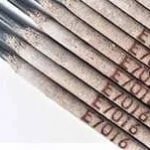
ER309L welding wire
The ER309L welding wire is often called the “Universal Bridge” of the welding world. If you are working in a shop that handles both carbon steel and stainless steel, this is the most critical alloy in your cabinet. Its high chromium and nickel content makes it the primary choice for preventing metallurgical failure in high-stress transition joints.
ER309L welding wire is a versatile TIG and MIG welding wire rod available in straight wire and wire spools. This wire contains 24% Cr and 13% Ni as primary alloying elements.
ER309L is used for welding similar alloys, welding of stainless steel to mild steel, carbon steel and low alloy steel. ER309L is also used to weld 304 stainless steels when corrosion resistance for weld is required.
ER309L is the low carbon variant of ER309 filler wire giving high intergranular corrosion resistance and sensitization without any addition of titanium or niobium.
🔬 What is ER309L? (The Metallurgy Explained)
The “L” in ER309L stands for Low Carbon (<0.03$). This is vital because it minimizes the risk of carbide precipitation—a phenomenon where chromium and carbon combine at high temperatures, leaving the weld vulnerable to intergranular corrosion.
While ER308L is used for joining “like-to-like” (304 to 304), ER309L is specifically engineered with “over-alloyed” chemistry. It contains more Chromium (23-25%) and Nickel (12-14%) than the base metals it usually joins. This ensures that even after the weld pool is “diluted” by carbon steel, the final weld remains fully austenitic and crack-resistant.
ER309L Welding wire rod Specification
ER309L welding wire rod specification is AWS A5.9. ER309L is the classification number for this wire. AWS A5.9 specifies the chemical composition requirements and test required for this classification.

ER309L TIG MIG Wire Chemical Composition
ER309L welding wire is primary composed of 23- 25% Cr, 12-14% Ni, 0.75% moly and 0.75% copper. The full chemical composition required as per AWS A5.9 for ER309L classification is given in the below table:
| C% | Cr% | Ni% | Mo% | Mn% | Si% | P% | S% | N% | Cu% |
| 0.03 | 23.0-25.0 | 12.0- 14.0 | 0.75 | 1.0- 2.5 | 0.0- 0.65 | 0.03 | 0.03 | – | 0.75 |
ER309L wire mechanical properties
ER309L Mechanical properties are not specified in AWS A5.9 specification. The typical as welded ER309L tensile strength is 590 MPa (85 Ksi) and ER309L yield strength is 440 MPa (63 Ksi). ER309L filler rod being an austenitic stainless-steel filler has around 35% elongation.
A summary of typical ER309L mechanical properties are:
- Tensile Strength: ≈ 590 MPa (85 Ksi).
- Yield strength: ≈ 440 MPa (63 Ksi).
- Elongation: ≈ 35%.
ER309L A Number and F Number
AWS A5.9: ER309L Welding wire A-Number is “8” (Same for TIG and MIG welding) and F Number is “9”.
ER309L vsER309LSi
Both ER309L and ER309Lsi are having similar metallurgy and applications. The main difference between ER309L and ER309LSi is the amount of silicon alloying. ER309L contains 0.30- 0.65% silicon while the ER309LSi contains 0.65- 1.00% silicon.
The higher silicon present in ER309LSi gives superior molten weld pool fluidity which is beneficial for MIG welding. In MIG welding, we have a higher molten weld pool compared to TIG. Adding higher silicon gives good usability characteristics to this wire for GMAW applications.
Although, being an austenitic stabilizer Silicon gives rise to high austenite in weld metal. This may be a concern for low ferrite weld deposit that are more prone to hot cracking. You can overcome this issue if you notice low ferrite by using higher welding heat input.
ER309 vs ER309L
ER309L is the low carbon variant of ER309 welding wire. Both ER309 and ER309L has same chemical compositions except the carbon content. ER309L contain a maximum carbon of 0.03% while ER309 carbon content is up to 0.12%.
Due to high carbon, the tensile strength of ER309 is higher than ER309L. Although, on other side, the intergranular corrosion resistance of ER309L is higher than ER309.
ER309L Shielding Gas
ER309L shielding gas for TIG welding is pure argon. For MIG welding applications using ER309L, Argon98% + Oxygen 2% is commonly used. Oxygen is added to provide fluidity to the molten weld pool.
ER309L TIG Rod
ER309L tig wire rod are manufactured as per AWS A5.9 specification. The wire is available in different diameters of 1/16” (1.6mm), 3/32” (2.4 mm), 1/8” (3.2 mm) and 5/32” (4.0 mm).
TIG welding using ER309L requires argon gas weld shielding and can be used to 304 or other stainless steel grades to carbon steel, low alloy steel, ferritic, martensitic, duplex stainless steel.
ER309L MIG Rod
ER309L Mig welding wire is manufacturered as per AWS A5.9 specification. MIG welding wires with ER308L classification are generally welded using argon + 2% oxygen welding shielding gas.
ER309L mig wires are available in different diameters ranging from 0.25”, 0.035”, 0.45″ and 1/16”.
What is er309l used for?
ER309L is an austenitic stainless steel alloy that is widely used in the welding industry. It is a low-carbon version of ER309, which has a slightly higher carbon content. The “L” stands for low-carbon, and it allows welders to use this alloy without fear of cracking or embrittlement during welding processes.
ER309L is a versatile welding wire and mainly famous for dissimilar welding applications. It has excellent weldability characteristics and is often chosen for its good corrosion resistance properties, making it an ideal choice for many welding applications.
Er309L also provides good mechanical strength at high temperatures allowing for greater flexibility when welding different steels together. This makes it ideal for joining components made from different grades of stainless steel such as 304 to 309 or 316 to 317.
🏗️ Top 3 Applications for ER309L
1. Dissimilar Metal Joining (The Most Common Use)
When you weld Austenitic Stainless Steel (like 304L or 316L) to Mild Steel or Low Alloy Steel, you must use ER309L. If you used ER308L, the carbon steel would “dilute” the chromium too much, leading to the formation of brittle martensite and causing the weld to snap under stress.
2. Buffer Layers for Hardfacing
Before applying a very hard, brittle overlay (like Stellite or Tungsten Carbide) to a carbon steel part, a “Butter Layer” of ER309L is applied. It acts as a ductile shock absorber that prevents the hardfacing from cracking the base metal.
3. Cladding and Overlays
Used for “Corrosion Resistant Overlay” (CRO). You can turn a cheap carbon steel tank into a corrosion-resistant vessel by cladding the interior surface with a layer of ER309L.
⚡ Welding Parameters (Guidelines)
TIG (GTAW) Settings
- Shielding Gas: $100\%$ Argon (or Argon/Helium for thicker sections).
- Polarity: DCEN (Direct Current Electrode Negative).
- Tungsten: $2\%$ Ceriated or Lanthanated.
MIG (GMAW) Settings
- Shielding Gas: 98% Argon + 2% CO2 or “Tri-Mix” (He/Ar/CO2).
- Transfer Mode: Spray transfer is preferred for clean, spatter-free stainless welds.

Material Welding is run by highly experienced welding engineers, welding trainers & ASNT NDT Level III bloggers.
We strive to provide most accurate and practical knowledge in welding, metallurgy, NDT and Engineering domains.