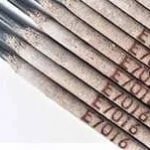
ER5356 aluminum welding wire is a versatile Aluminum-magnesium base solid filler wire rod used for aluminum TIG and MIG Welding. The main alloying element is magnesium around 4.5- 5.5%. The ISO 18273 equivalent of ER5356 is AlMg5Cr(A).
ER5356 welding wire is used for the welding Aluminum grades 1XXX series (1060, 1070, 1080, 1100), 5XXX series (5110, 5120, 5130, 5140, 5350), 6XXX series (6005, 6061, 6063, 6101, 6151, 6201) and 7XXX series (7004, 7005, 7039 and 7100). ER5356 should not be used for high temperature applications. ER5356 melting point is 1060-1175°F (571-635°C).
If ER4043 is the “smooth operator” of the aluminum world, ER5356 is the “muscle.”
As the most widely used aluminum filler metal for structural applications, ER5356 (AlMg5) is the go-to choice when strength and ductility matter more than aesthetic fluidity. Whether you are welding a checker-plate toolbox, a fuel tank, or a 5083 boat hull, understanding the behavior of this magnesium-rich alloy is essential for preventing structural failure.
ER5356 Welding wire Specification
ER5356 Welding wire Specification is AWS A5.10. ER5356 is this wire classification. The equivalent ISO Specification for ISO 18273.
ER5356 F-Number as per ASME Section IX is F-Number 22. The UNS Number for ER5356 is UNS A95356.
Specifications & Classifications
| Standard | Classification |
| AWS A5.10 | ER5356 |
| ISO 18273 | AlMg5Cr(A) |
| UNS Number | A95356 |
| Melting Range | 571 Deg C- } 635 Deg C (1060 Deg F- 1175Deg F) |
| Density | 2.64 g/cm3 |
ER5356 Chemical Composition
ER5356 is an aluminum alloy that is commonly used in welding applications. The chemical composition of ER5356 welding wire required as per AWS A5.10 are:
| Element | Weight % |
|---|---|
| Silicon (Si) | 0.25 max. |
| Iron (Fe) | 0.40 max. |
| Copper (Cu) | 0.10 max. |
| Manganese (Mn) | 0.05- 0.20 |
| Magnesium (Mg) | 4.5- 5.5 |
| Chromium (Cr) | 0.05- 0.20 |
| Zinc (Zn) | 0.10 max. |
| Titanium (Ti) | 0.06- 0.20 |
| Aluminum (Al) | Remainder |
| Barium (Be) | 0.0003 |
| Others | 0.15 max. |
ER5356 is an aluminum alloy that is commonly used in welding applications due to its high corrosion resistance and weldability properties.
ER5356 Mechanical Properties
ER5356 is an aluminum-magnesium TIG-MIG welding wire that is commonly used welding many different aluminum alloys. Mechanical properties of ER5356 are not specified in AWS A5.10 as only chemical test is required for this wire.

The reason for not specifying the mechanical properties for ER4043 is because of changes in strength due to different welding processes and heat input.
ER5356 typical Tensile strength is 29-45 Ksi (200 to 310 MPa) and Yield strength is 12-30 Ksi (83 to 207 MPa).
Aluminum is a soft metal and even its alloys are soft. ER5356 grade aluminum weld deposit hardness is generally in the range of 110- 130 HV.
ER5356 Welding wire Metallurgy
ER5356 is an aluminum alloy containing approximately 5% Magnesium (Mg).
Unlike Silicon (used in ER4043), which suppresses the melting point to make the puddle fluid, Magnesium creates a weld deposit that is:
- Stronger: It offers nearly double the shear strength of ER4043.
- Ductile: It has high elongation (10-15%), meaning it can stretch and flex without snapping.
- Stiff: The wire itself is physically harder, making it much easier to feed through MIG torches without bird-nesting.
The “Soot” Factor (Magnesium Oxide)
The downside of Magnesium is that it vaporizes easily. When you weld with ER5356, you will often see a black, soot-like deposit along the toes of the weld.
- What is it? This is Magnesium Oxide (MgO).
- Is it a defect? No. It is largely cosmetic. Unlike porosity, it sits on the surface and can be wire-brushed off. However, excessive soot indicates your arc length is too long or your voltage is too high.
ER5356 TIG Filler Rod
ER5356 TIG filler rod is an Al-Mg base aluminum alloy having good corrosion resistance and strength.
The wire is manufacturer according to the AWS A 5.10 specification and available in different diameters.
ER5356 MIG wire
ER5356 is a MIG wire used for welding aluminum. This wire is classified as an ER5356 because it contains 5% magnesium. The addition of magnesium to the aluminum helps improve the weldability of the metal. This wire can be used to weld a variety of aluminum alloys, including those with high silicon content.
ER5356 has a low melting point and strong weld penetration. This makes it ideal for welding thick materials or materials that are difficult to weld. The low melting point also allows the wire to be used in low-amp applications.
This wire produces little spatter and has good arc stability. These properties make it easy to use and produce clean welds that have a smooth finish.
ER5356 Welding Polarity
When welding with ER5356 wire, it is important to use the correct polarity in order to get the best results.
TIG welding is carried out using AC Polarity while MIG welding is generally carried out using AC Polarity or Pulse welding.

Welding with AC gives cathodic cleaning action that helps to eliminate welding porosity and gives good penetration.
Welding with DCEN is not recommended as there will be no cleaning action and weld will have porosity.
ER5356 vs. ER4043
This is the most common decision a fabricator has to make.
| Feature | ER5356 (Al-Mg) | ER4043 (Al-Si) |
| Weld Strength | High (26 Ksi shear) | Lower (15 Ksi shear) |
| Ductility | High (Good for forming) | Low (Brittle) |
| Feedability | Excellent (Stiff wire) | Poor (Soft wire) |
| Fluidity | Stiff / Sluggish Puddle | Very Fluid / Wet |
| Anodizing | Silver (Color Match) | Black (Turns Dark Grey) |
| Crack Sensitivity | Moderate (Use tabs) | Low (Very resistant) |
| Service Temp | Max 65 Deg C (150 Deg F) | High Temp OK |
The Rule of Thumb:
- Welding 6061 to 6061 for a structural frame? Use ER5356.
- Welding Castings or manifolds? Use ER4043.
- Welding 5052 or 5083 marine plate? MUST use ER5356 (or ER5183).
ER5356 vs ER5183
Both ER5356 and ER5183 are aluminum-magnesium base TIG-MIG filler wire rods for Aluminum welding.
The main difference between ER5356 and ER5183 is the manganese amount. ER5183 contains higher manganese (0.50- 1.0%) compared to ER5356 (-.05- 0.20%).
ER5356 has higher weld strength compared to ER5183 welding wire.
ER5356 or ER4043: Which one is suitable for you?
ER4043 and ER5356 are aluminum welding wires that have different properties.
- ER4043 is a Silicon-Aluminum base wire while ER5356 is Magnesium-Aluminum base wire.
- ER4043 has a low melting point but higher molten pool fluidity compared to ER5356 wire.
- ER5356 welding wire is suitable for anodizing after welding however ER4043 does not suit after weld anodizing weld applications.
- ER5356 is a magnesium-containing wire that has a higher weldability, higher welding strength and better ductility. It is best used for welding thicker sheets of aluminum.
Stress Corrosion Cracking (SCC) Issue with ER5356
There is one major limitation to ER5356 that every engineer must know: Temperature.
Alloys with more than 3.0% Magnesium are susceptible to Stress Corrosion Cracking (SCC) if exposed to elevated temperatures.
- The Limit: Do not use ER5356 for components that will operate continuously above 65Deg C (150F).
- The Consequence: Over time, the magnesium precipitates at the grain boundaries, and the weld will fail catastrophically under load.
- The Fix: If welding an engine block, heat exchanger, or muffler bracket, use ER5554 or ER4043 instead.
Operational Tips for MIG Welding using ER5356
1. Feeding is Easier
Because 5356 is stiffer (higher column strength) than 4043, it is much more forgiving in MIG guns.
- You can often use a standard Push Gun with a shorter cable ($3\text{m} / 10\text{ft}$) if a Teflon liner is installed.
- However, a Push-Pull Gun or Spool Gun is still recommended for production work.
2. “Burnback” Issues
ER5356 has higher electrical conductivity than steel. If the wire touches the contact tip, it can micro-arc inside the tip (Burnback), fusing the wire to the copper.
- Tip: Use contact tips specifically marked for Aluminum (usually designated with an “A” or slightly oversized bore).
3. Cleaning is Critical
Magnesium oxides are tenacious. While 5356 cuts through oxide better than 4043, you still need to follow the “Acetone then Stainless Brush” rule.
- Warning: Unlike 4043, the puddle of 5356 does not “wet out” as easily. Do not weave excessively. Use a “stringer” bead or a tight “step-pause” motion to ensure fusion at the toes.
When to Specify ER5356?
Put ER5356 in your WPS if:
- Base Metal: You are welding 5050, 5052, 5083, 5086, 5454, 5456, or 6000 series alloys.
- Application: Structural frames, trailers, boat hulls, gangways, or tanks.
- Finish: The part will be anodized.
- Strength: Shear strength is a design priority.
Avoid ER5356 if:
- The part operates above 150Deg F (65Deg C).
- You are welding Cast Aluminum (A356).
- The aesthetic appearance of the weld bead (smoothness) is more important than strength.

Material Welding is run by highly experienced welding engineers, welding trainers & ASNT NDT Level III bloggers.
We strive to provide most accurate and practical knowledge in welding, metallurgy, NDT and Engineering domains.